
New to Track Days, Here’s my Frequently Asked Questions
About the Project
What is this blog about?
This is a real journey documenting my experience taking my MX5 to track days as a complete novice. I’m learning as I go, sharing what worked, what didn’t, and everything in between – from buying the car, prepping it for my first outing, bricking it on my first track day to figuring out setup, technique, and what it actually takes to track a car safely.
Why document a beginner’s perspective?
I wanted a record that’s not a glossy video. I wanted to show what it’s actually like starting from zero: the mistakes, the discoveries, the small wins, and the reality of doing this on a budget (or close to it). If you’re thinking about track days but have no experience, this is written for you.
How often do you update?
I post as I develop the car or my skillset and after major track day events or when I’ve learned something worth sharing. New content typically goes up within 1–2 weeks of an event.
Getting Started with Track Days
I’ve never been to a track day. Is it too scary?
Honestly? The first one is a bit nerve-wracking. But it’s thrilling, not that dangerous – if you go prepared. Track days are run by professionals, you’re on a closed circuit with proper safety setup, and everyone there wants you to succeed. I was nervous before my first laps and came back at the end of the day booking the next event immediately.
Do I need a special car to do this?
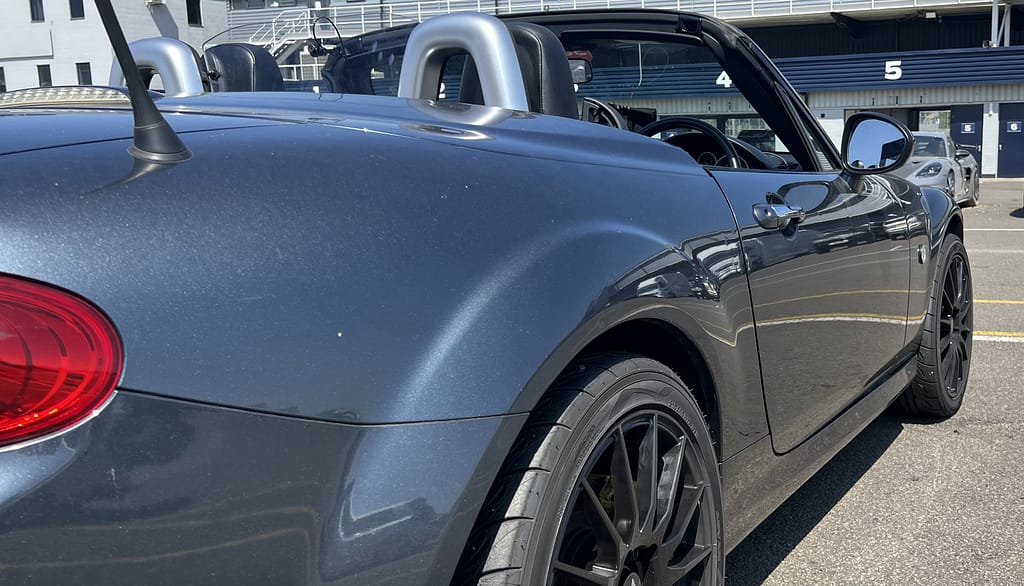
No. I started doing it in a standard MX5 with minimal modification. What matters more is that your car is mechanically sound, your brakes and tires are in good condition, and you respect the limits. Be warned, the edge of the rabbit hole is very slippy and you will tumble willingly down it after your first outing.
What’s the cost to attend a track day?
Depends on the organizer and location, but expect £100–300 per day for entry. Factor in fuel, potential tire wear, and consumables (brake fluid, coolant top-ups). I track my costs in each post so you can see the real numbers. Silverstone is more expensive £600+ if you want to do the F1 GP Circuit.
How do I find track days near me?
Most tracks advertise events on their websites. Common UK organizers include Trackday.co.uk which seems to be a broker of multiple providers. Direct providers like OpenTrack and Javelin and individual circuit websites like Silverstone and Pembrey who organise their own days. Start by finding a track within reasonable driving distance and check their calendar.
Car Preparation & Safety
What are the minimum safety requirements for my MX5?
Every organizer has slightly different rules, but typically:
- Helmet (required) – DOT, ECE, or BSI approved. Budget £50–150 for a decent one. Full Face if you are in a soft top or other convertible / open cockpit.
- Brakes – must be in good condition. I check mine monthly; they’re doing the real work.
- Tires – legal tread depth (1.6mm minimum), but honestly, track-specific tires (even budget ones) are worth it.
- Fluid levels – top up brake fluid, coolant, and oil before you go.
- Seatbelt – must be in good condition. Some events require a 4-point harness; check ahead.
- Lights & mirrors – must work (they’ll check).
- No loose items – nothing rolling around inside the car.
- Noise Limit – Each circuit has a noise limit. My standard MX-5 was usually at 82-84 dB at 4.5k revs.
Do I need to upgrade my brakes?
Not necessarily. Stock MX5 brakes are capable of safe track day driving if they’re well-maintained. What matters: good brake fluid, properly bled lines to remove air, and knowing when they’re getting hot (you’ll feel and smell it). Upgrades come later if you want them.
For my first track day I installed EBC Yellowstuff Pads which are road legal high performance pads. I replaced the disks with new standard rotors and topped it up with good quality brake fluid. Ive read that the MX5 brakes are pretty good anyway so until you upgrade performance you’ll do ok on the standard stuff. I’ve seen reports that standard brake pads don’t give you as long on track as they go off a little due to overheating leading to some fade. -Solution do block of lap and allow the cool down whilst you recharge ready to go again.
Later I painted my calipers, serviced a sticky caliber and added braided brake lines to the calibers.
What about tires?
My first track day was done on standard rims and tyres in the wet (see videos below). These remain my wet weather goto wet weather tyres recently bombing round Silverstone at over 100mph in places in monsoon-like conditions. I took them around Thruxton in dry conditions and they were noisy but fine. Closing out the day with a melted top layer – Happy Tyres.
Standard tyres overheat faster and offer less grip than more track focussed tyres. As the rabbit hole beckons you’ll begin to gaze fondly at other people tyre choices. I shelled out for some nice wheels and the Yokohama AD08RS tyres these now form my dry condition tyres for the time being.
Just as with standard brakes take a few laps to warm them up gently and then a block of faster laps and then come back in to allow them to cool before going again.
My car makes weird noises on track. Is it broken?
Cars under load make different noises to tootle around town (listen to the videos below). I’ve recently upgraded the exhaust on mine so now mine growls and burbles on the over-run, my tyres squeal some of the time and when I really push the traction control kicks in making a grating noise and judder. Under braking some cars squeal especially when fitted with track brake pads. Occasionally I make a mistake and hit the rev limiter (try not to do that).
That said, listen for grinding (brake pad wear), loud rattles (especially from loose trim or the engine), or any sudden change. Oil lights and knocking from the engine – not good). I’ve had a pin fall out of my brakes which showed up as the same loud ticking noise from the wheels that indicates loose wheel studs. few scares that turned out to be nothing, but trust your gut. If something feels wrong, pull off and walk around the car.
It’s probably worth remembering that your breakdown cover probably doesn’t cover motorsport events like track days. You can get insurance to cover this but it is expensive.
Is it really safe?
That depends on you and those around you. You’re in a controlled environment, speeds are managed, and professional marshals are watching. Overestimating your ability or your car’s ability other cars doing the same. Stay humble, follow the driver briefing, warm your car up over a few laps and get out of the way of faster cars according to the briefing rules.
Most drivers driving their road cars are pretty civil. The odd car has passed me too close or on the entry to a corner and both the drivers of my car quickly learn which cars are driven by less considerate drivers. Every session I have been to has seen red flag stoppages for cars going off, I’ve overcooked it braking in the rain and slid off the track.
When I’m pulling out of the way of faster cars I use the indicators to let them know where I am going.
The black flag deals with drivers who are dangerous to themselves or others.
Some drivers wear full PPE in the form of FIA suit, boots, balaclava, glovers and helmet. I wear full face helmet, gloves and a balaclava, long sleeve tops and trousers not shorts, mostly to guard against flying glass or track debris .
None of this has stopped me going back for more. stoppages for try to be a hero on lap one.
The Driving Experience
What’s a typical full day track day like?
A day or so before the event there will be an online briefing and check in, which tells you all you need to know about the day and the track rules and flags for the event. There is usually a disclaimer to sign, possibly a short exam about overtaking rules, flags, track safety and breakdowns on track.
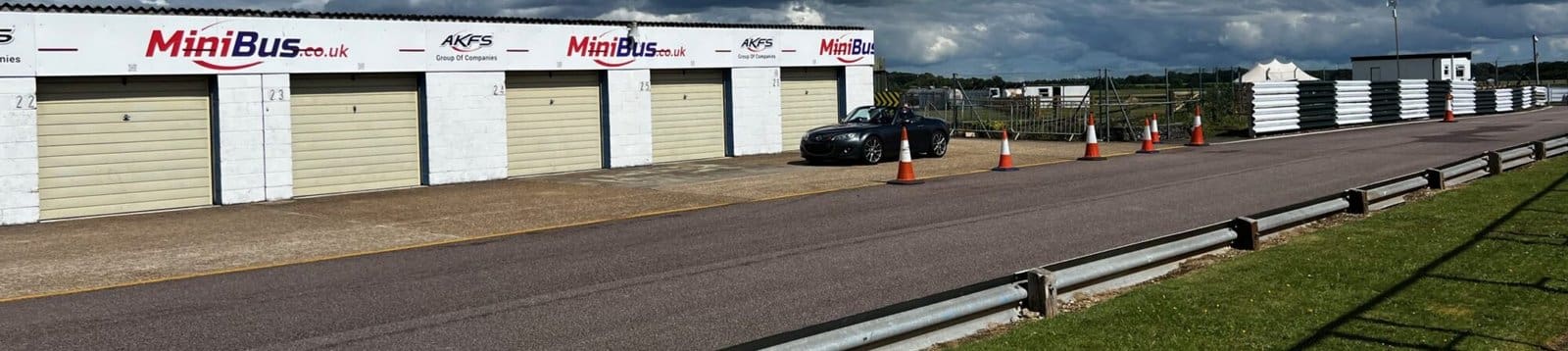
If you have booked a pit garage with your track day you’ll set up there, if not there’s often a paddock area near the pits or someone will tell you where to set up. At Castle Combe its the parking area infant of the main buildings, at Thruxton its the pit paddock area and the large parking area between the toilets, Parc Ferme / sound check area and the cafe. At Silverstone its been in the massive paddock behind the old pits.
On the day most events I’ve been to open at 07.30 for registration and run to around 17.00 run. Registration checks your details against your driving licence and issues you and others with you their wristbands. If you don’t have a crash helmet or forget it in all the excitement, you can usually hire one at this point.
If there’s a noise test that probably opens around 08.00 if you pass you are issued with a sticker. Some tracks have a track-based sound monitoring system and don’t have this step.
Some companies then have a driver briefing probably at around 08.30 to refresh the track and safety rules for you and deal with any questions you may have (like how do I get into the pit lane).
Access to the track is via the pit lane and controlled by a Marshall. who will check your wristband and check your cars authorisation stickers match those for the day.
At around 09.00 there will be a tour of the track (at around 50mph max) line astern behind the safety car so you can get a feel for the lay out of the track, the racing line and see where the Marshalls posts, flags and lights are located. Depending on how many of you are attending there may be more than one of these sessions so when you see the chequered flag you must come back into the pits when you reach the pit entry lane. If you want to go round again under the safety car you can probably join the back of the waiting cars as long as you don’t block the pit lane in doing so.
Once the safety car familiarisation tours are completed the track will go live and be controlled from the pit lane.
Most participants then go out take a couple of laps to warm the car up properly before trying some faster laps and then coming in to cool the car down before going out again. You will find remembering to park the car in gear or with wheel chocks and not putting the handbrake on when you come in (to stop hot brakes binding with the disk) is really hard when you are new to this track day lark.
There is usually an hour break for lunch during which time the track is closed.
The afternoon session will run until the chequered flag at 17.00. The afternoon sessions usually see participant numbers dwindling as people head home or cars breakdown so if you can try and hold out until then if you want a clearer track.
Each session is often broken up by red flags, or slowed by yellow flags.
If you’re new to this you’ll find it very tiring, bring water, energy drinks, some snacks and a picnic, there is often a cafe or restaurant. some providers include lunch in the session price, most don’t.
How fast will I go?
On your first day, probably not as fast as you think you will. Speed comes naturally as you learn the circuit and build confidence. this video shows my first track day in a standard 2.0 MX5 NC Sport Tech.
Some operators offer track days for beginners, some offer ability level groups so novices and intermediates can be seperated from advanced drivers.
Open Pit Lanes mix all ability levels together. I’ve always used Open Pit Lane sessions without magor problems.
They video below shows a year later at the same track.
What if I spin out or go off?
It happens to everyone. Most operators say if you go off on the sighting laps behind the safety car then they will exclude you from the rest of the session. This sounds worrying but it is unlikely unless something daft.
Often there is a spin-and-in rule in which case you’ll be expected to come in talk to a marshal even if you get the car back on the track. This allows you to check you car over and be confident that nothing dangerous has occurred to it.
Sometimes you have a run off area to drive across if you are unlikely to make the corner properly.
You must drive within the limitations of you, your car and the track if you don’t you’ll be black flagged, if you get black flagged more than once you run the risk of being excluded from the day.
Some operators offer lessons on the day (free or at a cost) to help you build your skills. or The marshals will help you get back on safely, and you keep going. No shame, no judgment. I’ve spun twice, and both times I just got a radio check to make sure I was okay and rejoined. Part of learning.
Will I damage my car?
Unlikely if it’s maintained properly and you stay sensible in what you ask of it. Most wear is tire and brake pad consumption (expected), maybe some fluid loss due to heat. I’ve not yet had a mechanical failure on track. The main risk is driver error (curbing wheels, hitting a barrier), so stay focused and within your limits.
Do I need special driving shoes or gear?
A helmet is required. Everything else (driving shoes, racing suit, HANS device) is optional for track days, though some are safer than others. I started in regular shoes and a long sleeved t-shirt; as I got more serious, I invested in proper gear. Start simple, upgrade as you commit.
The Blog & Community
Can I use your posts to prepare for my first track day?
Remember that any form of motorsport can be dangerous and you should make your own decisions, assess risks and build your skills and knowledge as you go. I want this blog to be about my journey down this wonderful rabbit hole so as long as you don’t rely on my experiences but do the research and take advice from various sources to help you make you own decisions then I’m happy for you to draw a little from my experiences.
In my blog each post covers what I did, the choices I’ve made, the logic behind them; what went right, and what I’d do differently next time. You’ll get a realistic sense of the day and what to expect.
My FAQ’s will evolve as I learn more.
Will you cover [specific topic]?
Drop a comment or reach out. If it’s relevant to the novice track day journey, I’ll add it to my list.
Are you affiliated with any track day organizers?
No. This is independent. I write honestly about my experiences, good and bad.
Last updated: 2026-08-03 | Questions? Comment below or get in touch.
